Inside Trump's Stealth School Voucher Program: What's At Stake
LISTEN TO THE EPISODE
-
Louis Freedberg: 0:04
Welcome to Education on the Line, a podcast series focused on the latest threats to public education and strategies for confronting them. I'm Louis Freedberg.
Louis Freedberg: 0:16
As we noted in our last podcast, unlike higher education, K-12 education has at least so far escaped the full force of Trump's efforts to reshape our nation's schools. That could change a year from now when a federal tax credit scholarship program, which could funnel billions of dollars into tuition for private schools and religious schools, goes into effect. It's included in the Budget Reconciliation Bill, cynically titled, I think, the One Big Beautiful Bill. That is why we are going to focus on this extremely important issue today.
Louis Freedberg: 0:58
To help us understand what to expect, I'm pleased to welcome two guests. First, Jon Valant. He is director of the Brookings Brown Center on Education Policy, which, as many of you know, is an invaluable source of analysis for anyone trying to make sense of education in the United States. Jon has written extensively about the impending tax credit. He has a PhD in educational policy and a master's degree in political science from Stanford University and a master's in public policy from Harvard University. Welcome, Jon Valant.
Jon Valant: 1:37
Thanks for having me.
Louis Freedberg: 1:38
Also with us is Jessica Levin, litigation director of the Education Law Center, which has taken on a wide array of issues in defense of public education. Jessica has a law degree from Harvard Law School and an MPhil from Oxford University. She clerked for Judge Carlos Lucero on the 10th Circuit Court of Appeal. And most relevant for today's discussion, she directs the Education Law Center's Public Funds Public Schools campaign, which has been at the forefront of opposing school voucher programs over the years. Welcome, Jessica.
Jessica Levin: 2:14
It's great to be here. Thank you.
Louis Freedberg: 2:16
Well, let me start with you, Jon Valant. Could you just explain what this program actually does? It seems like an extraordinarily generous tax credit program.
Jon Valant: 2:29
Yes, it is. And it's also a confusing program. So it's worth taking a second to talk about what it is. And in short, it's basically a voucher program where money kind of moves around in funky ways. But to sort of step back, the way I think a lot of your listeners might know of voucher programs, government would give funds to a family, and then the family would use the funds to pay for private school or to pay for some other kind of education expense. The way this particular program works, so this is a tax credit scholarship program. And the way this particular program works is those families are getting money from organizations called scholarship granting organizations. So we'll probably call them SGOs for scholarship granting organizations. And those are they're nonprofit organizations, and the way that they get their money is they get their money from donors. So you know, people around the country can donate to those organizations, except they're getting a tax credit in this case from the federal government. So once this program is up and running, if you are in a state that opts into this program, you could donate up to $1,700 to one of these scholarship granting organizations. And then you would get that $1,700 back as a tax credit at tax time. And then the organization that you donated the money to will give the funds out to kids to pay for private schools. So functionally, it is basically a voucher program. And it's a voucher program that honestly doesn't even have the same kind of rules and protections that most voucher programs do.
Louis Freedberg: 3:56
So I give $1,700 to this scholarship granting organization, which sounds a good idea. I'm interested in kids getting scholarships. I give $1,700 and then I get all the $1,700 back.
Jon Valant: 4:10
Yeah, that's right. So if I'm if I'm running that SGO, then Lewis, you would donate your $1,700 to me. And then when it's tax season and you file your income tax returns, you would get the full $1,700 back. And then I would have that money and I could give it to Jessica to give to her kids to go pay for private schooling. So yes, you get the full funds back. And so the program is kind of presented as being funded by donors, but they're really not donors because they're getting fully reimbursed for their donations. It's really a government-funded program that looks like it largely will be kind of a voucher program.
Louis Freedberg: 4:43
I would have to write out a check or send it via credit card to this scholarship organization, right? And then I would have to remember when I file my taxes to apply for the credit.
Jon Valant: 4:54
Well, that I think is the way that it was envisioned. I do know that a lot of the proponents of that program are trying to find ways to, for example, work donations into TurboTax or into HR blocks so that you could actually make that contribution right at the time you're filing taxes. And part of why that matters is we don't have a good sense yet of how big this program is going to be. It could be that it takes a couple of years and it's kind of a slow-building program because it's kind of a weird ask of parents, like, hey, donate $1,700 to this organization, I swear you'll get it back. But if it does start to get worked into some of our big tax infrastructure, like if it is just a button that you click on TurboTax, there is potential that this very quickly becomes a very, very large program.
Louis Freedberg: 5:40
Let me ask you, Jessica. My understanding is that the provision of this law, the Budget Reconciliation Bill, it's a very short section that refers to this program. Many, many details have yet to be determined or fleshed out. And just for those of you out there who want to actually go and look for this, it's section 70411. And I think there's going to be a lot of attention to that section in the months and years to come. Because this is now law. Congress passed this law. The federal government, the Department of Treasury, and the IRS did invite comments from a lot of people. Can you still submit comments or where where do we stand with that process?
Jessica Levin: 6:23
Yes, there will be another opportunity to submit comments. The official regulatory process hasn't really actually started. So what happened late last year was a request for comment by the IRS and the Treasury Department, which gave us an idea what the regulations might look like. They laid out some of the things they were thinking about putting in the regulations and they requested comment. So there was a comment period, it ended the day after Christmas. Now the department will still have to do a formal regulatory process, which is governed by law, by the Administrative Procedure Act, and they will have to propose regulations. So have an actual set of proposed regulations. There will be a public comment period then before final regulations are issued. And so, yes, everyone should look out for that public comment period and comment.
Louis Freedberg: 7:10
So my understanding is that these funds could be spent for any what they call qualified education expenses, not just tuition. Could you just explain what expenses they could be used for?
Jessica Levin: 7:25
Yes. So this is part of what Jon mentioned in the statute being confusing in many respects. So the definition of qualified educational expenses in the One Big Beautiful Bill section that established this voucher program refers to a separate part of the federal code, which is Coverdale scholarships, Coverdale accounts. And they have a definition of allowable expenses in that section of the law. And there's a whole list, but basically they cover both private education expenses, which could be tuition, or a wide range of other private education expenses like tutoring or materials. And then technically, the money also could go to public school students. I'll be happy to talk about why that is not really a significant part of this program and why this program will be more harmful to public school students than any small benefit they might gain.
Louis Freedberg: 8:26
But just to clarify, these qualified expenses include things like books, tutoring programs, a bunch of other expenses that are not tuition, right?
Jessica Levin: 8:39
Right. And so in that way, even though this is a tax credit voucher program, as Jon explained, in a sense, it is also what we call an education savings account program in the sense not that money goes to a separate account necessarily for people to draw from. It goes through the scholarship granting organizations, but in the sense that ESA voucher programs allow expenditure on a wide array of private educational expenses. And we have seen in many states like Florida, like Arizona, a huge amount of fraud, waste, and abuse, which a broader definition makes more possible. And then of course, which a lack of accountability and transparency requirements like this law lacks, makes you know very possible and could end up in the waste or the illegitimate use under the statute of millions or billions of dollars.
Louis Freedberg: 9:30
Well, let me ask you, Jon, because this is where it is confusing, because I understand that statute does say that it could be spent on public schools, except not on programs or services that the taxpayer is already paying for, through state dollars or local dollars, or even federal dollars. But public schools are not shut out completely from using some of these funds.
Jon Valant: 9:54
Is that correct? That's right. There is room for some of the funds to be used on public schools. I think the the million-dollar question, or maybe the $20 billion question, we'll see how big the program gets. But the real question is how much control do states have over how those funds can be used? So, yes, it's possible that some of the funds could go to public schools, but it looks like the direction this is headed is that if you are in a state that opts into this program, you can't restrict the funding to be used in public schools. And you also can't really restrict the types of private schools that are going to get the funds. So if you opt in, you're opting in not only to, yes, having having some funds potentially there for public school students to pay for tutoring or for some kind of supplemental services, but also you're potentially paying for kids to attend private schools that can discriminate on the basis of LGBTQ status or religion or a whole host of things that won't be tracking outcomes in any way that's required by the law, that very likely will steer funds toward wealthier families instead of poorer families. So, yes, the the short answer is yes. The funds could be used for public schools and for public school students, but I think there is a lot of reason to suspect that the vast majority of that funding would end up in the hands of private school students.
Louis Freedberg: 11:12
We're going to come back to that, but uh there's another area that I we just have to get on the table as to who is eligible for this program. My understanding is that anyone in your local area, if you are making up to 300% higher than the median gross income in that area, you qualify for this. Now, sitting where we are in the Bay Area, I think the median income is about $100,000, $150,000. So you could be making up to $500,000, $450,000, $500,000 and be eligible. That's not the case in many parts of the country. But just clarify who actually would qualify for this? Jessica?
unknown: 11:54
Jessica.
Jessica Levin: 11:54
You're right. It's students in households that are earning not greater than 300% of the area median gross income. And like you've just alluded to, that means it shifts between areas. It's not just one number cut off for income. And in some places it can be quite high, up to maybe half a million dollars. And that's one of many features of this program that gives the lie to the idea that it is targeted to disadvantaged students, low-income students.
Louis Freedberg: 12:21
I mean, that's 90% of people in the United States who'd qualify for this.
Jessica Levin: 12:26
And we've seen that in what we call universal eligibility voucher programs, or in this case, near universal eligibility, the problems and the dangers of voucher programs are just magnified.
Louis Freedberg: 12:39
So also just setting the ground here, is this the first federally funded voucher or taxpayer supported program of this kind? Because there have been many now of states that have set up voucher programs of some kind, just using that term broadly. Is it savings accounts and so on?
Jon Valant: 13:00
It's the first of this type. So the federal government has funded a voucher program in Washington, D.C., for example, for a long time and these kind of these much smaller programs. But never has there been a program that potentially could reach all 50 states, nor of this scale and potential impact on our education system. And it is true, I think you're you're situating this in some important context, which is that we have seen a lot of states that have moved in the direction of different types of private school choice programs. And the kind of big defining characteristic of the recent programs is that they are universal in eligibility. So we now have these like very, very large programs that are sending money to a lot more families. They're just kind of inherently more threatening to public education. And this program, this tax credit scholarship program, is much more of the type that those programs are than these sort of very small programs that used to be targeted to students in poverty or students with disabilities. This is kind of a this is a big one.
Jessica Levin: 13:58
And I think what you point out that many states have voucher programs is the key to what people should think about this program, because we don't have to guess what the effects of voucher programs are. Unfortunately, we have dozens of examples in different states across the country, and the results are always poor in terms of academic outcomes, discrimination, money going to affluent families, money flowing away from public schools, you name it. And so our position is based not on ideology, or but it's based on empirical evidence.
Louis Freedberg: 14:31
What seems remarkable to me about this program is that we at this point we really don't know how many people are going to participate. I mean, tens of millions of people are potentially eligible to participate. And just to underscore this, this does not raise any new tax monies. These are using existing tax dollars for this program, which presumably means diverting taxpayer dollars from somewhere else or going deeper into debt. I've seen just wild differences in terms of the estimates. Jon, what are we talking about? What's the range that you've seen, and where do you think this might end up?
Jon Valant: 15:13
I think it's going to grow over time. And so, I mean, I think it's important to remember that the real constraint on the size is the number of people who donate to scholarship granting organizations. So if you don't have those donors, and again it's kind of donor and air quote because they are getting their money back, but if you don't have the donors, then you know every private school family across the country might want to go and get these funds. But if the funds have not been donated to a scholarship granting organization, the program can't really grow. And so what's going to determine how big this program gets is first of all, which states opt in. And so that's a part of this that we haven't talked about yet, which is that each state has the option of either opting into this program or not opting into this program. So one big factor here is gonna be do these states opt in? And then really the second big factor in determining how big it gets is how the recruitment of donors goes. And so, if you know, I think one expectation I have is that private schools are gonna be very aggressive in recruiting parents of their students to donate to a scholarship granting organization because it's a way of getting funds into the private school sector and potentially into their own private schools. But I my my expectation is that it's going to take time. So I wouldn't be surprised if this program is maybe a few billion dollars in the first year or two. But there is potential that, you know, in the years that come, that it could reach the size to rival the bohemoths in our space, you know, the Title Ones, the IDEAs, they're in that kind of $15 to $20 billion a year range. That is, that is not outside the realm of possibility. I would be pretty surprised if it happened right away.
Louis Freedberg: 16:49
Wait, wait. You're saying not million billion, you're saying a few billion initially, right?
Jon Valant: 16:55
B billion, yeah.
unknown: 16:56
Okay.
Jon Valant: 16:57
No, it's a big, it's a real, it's a real program. It's a big program.
Louis Freedberg: 17:00
Wow. Jessica, any any comments on the cost of this?
Jessica Levin: 17:04
Yes, the estimates are likely to be wild underestimates. And that again is based on empirical evidence. So the Congress's joint committee on taxation put the cost in the first year around three to four billion, perhaps with costs rising over time. The Institute on Taxation and Economic Policy says the cost could easily reach over $50 billion a year. And maybe that's a few years down the line. But as Jon said, that is rivaling or surpassing Title I funds for low-income students, IDEA funds for students with disabilities, which together are in the 30s of billions right now. So, and you're absolutely right that this uses existing taxpayer dollars. So the idea that this is free money or no burden to taxpayers is not true. It will significantly decrease the federal pie that we have to put toward actual evidence-backed educational programs or other urgent needs across the country and either, as you said, go further into debt or raise taxes. And also in taking money away from local public schools is likely to either cut resources in those local public schools andor raise state and local taxes.
Louis Freedberg: 18:25
You have to make at least $1,700, pay me $1,700 in taxes. There may be some very low-income parents in private schools and parochial schools who wouldn't qualify for the benefit. But if every parent in a private school donated $1,700, just the private school parents would be a significant amount.
Jessica Levin: 18:49
Those don't have to be the same people as receive the voucher. And the law says that you can't earmark, for example, a contribution for a particular student. But I think the Institute for Taxation's estimate is based on if this amount of purported voucher supporters were to contribute, it would be this amount. And that's how they get, you know, easily to between $20 and $50 billion. But you had asked about private schools raising their tuition or encouraging everyone to apply for a voucher. And no, there's nothing to stop them. And studies now are coming out now that we have a number of universal voucher programs showing that private schools do, in fact, raise their tuition when a voucher program comes to their state. So an Iowa study showed a nearly 40% increase in tuition. In North Carolina, tuition increases in the 24-25 school year between 20 and 50%. These are significant. So again, not making things more accessible for low-income families, just enriching wealthier families who are just going to get a subsidy for private schools they were already in, and private schools that are going to rake in more money.
Louis Freedberg: 19:53
I do want to get to the issue of which states are participating and which states should participate. But there's another big question. How does it actually work? I'm a parent and I apply to the scholarship association. I say I want X amount. How did the scholarship organization decide who's going to get the money and how much? I didn't see in the statute, this 70411, didn't say you can only get a maximum of X amount. Could they just give all the money to like 10 families?
Jon Valant: 20:26
Yes. It's one of the more amazing features of this program is just how little governance and how few guardrails there are around this. So there are a few. So for example, a scholarship granting organization has to give funds to at least 10 students in total. They can't all attend the same school. There are some sort of light rules around no self-dealing. So you the funds don't just kick back right away to the family that donated. And then there are some priorities for students as a program gets going for students who have participated in the past and students who have siblings. So there are a few rules. But if you start to think about what is possible within this program and the types of waste fraud and abuse that we could see, it really is extraordinary. I mean, an example of how this could go is you could imagine a scholarship granting organization that brings in, say, $5 million in a given year. They're allowed to take 10% of that off the top to cover their own expenses. So right off the bat, they're taking $500,000. There are no rules about how much money, what is the maximum amount of money they could give to any student. And that is a difference between this program and a lot of the state, even the big state voucher programs and ESA programs, they have rules about how much money you can give to a family. And so within this program, it would be entirely legal for one of those scholarship granting organizations to give a family $200,000 a year to pay for tutoring or to pay for a private school program. And it would also be entirely possible for that family then to turn around and pay a A friend for that tutoring, to pay that $200,000 to a friend for that tutoring. And there are just very, very few restrictions in the federal law that get at any of this, which is why I think a lot of us are looking toward, you know, if this program is going to be up and running, you at least have to give states some discretion so that they can set some guardrails around this, because there really are very, very few in the federal law.
Jessica Levin: 22:23
I would just build on that by saying think about what type of regulations or just governance or requirements are not in this law, in any sort of academic quality standards, curriculum standards, teacher certification standards, very little fiscal accountability standards, very little in transparency, very little in reporting, no anti-discrimination requirements. And the other thing I want to point out about that is that that is a choice. Lawmakers know that they could put things like that in a voucher program and they deliberately choose not to. And finally, it's important to remember that in this program, private schools can discriminate. As you alluded to, the SGOs are also able to discriminate.
Louis Freedberg: 23:10
The scholarship granting organization, SGO.
Jessica Levin: 23:13
That's right, exactly. So they are able to discriminate against students with disabilities, students of a religion that they don't want to give vouchers to, LGBTQ students, almost unlimited sort of possibilities for discrimination. You are just allowing scholarship granting organizations that meet these very minimal requirements to do that and to and to give money to pay private schools that do that.
Louis Freedberg: 23:39
Just a reminder, we're talking with Jon Valant, who is director of the Brown Center on Education Policy at Brookings and Jessica Levin, litigation director at the Education Law Center. I mean, it just seems extraordinary to me that the breadth of this program that you could give unlimited amounts to individual families.
Jessica Levin: 24:01
That shows how disingenuous it is when proponents claim that this is for low-income families or families that otherwise could not access private educational options. Because if it was about that, you would want to verify every year and you would want to redistribute the vouchers to lower income families if you found that a family had surpassed this already very high income limit. It shows how that's not truly the aim and has never been the aim. Jon mentioned that voucher programs sometimes started small, targeting low-income students, but almost all of them, they almost inevitably grow and increase in cost and increase in size and caps and remove caps and things like that. And that was clearly the playbook that is now being made explicit by the Trump administration and by other voucher proponents that they intend to make these programs as big as possible. And some have even started saying that quiet part out loud of we don't want public schools at all anymore.
Jon Valant: 24:58
And I think it's it's also worth taking a moment to stress that this is a federal program. And when we think about what the federal role is in education in this country, it is it really is it's protecting student civil rights, it's administering programs that get funds disproportionately to students in need. So students in poverty, students with disabilities. It's it's providing funding and support for research and development to make sure we're learning about schools and learning how to improve them. And this program just it violates all of those roles so fundamentally. I mean, it's it's very likely to be a regressive program. It doesn't have the protections against discrimination. There's so little that has to do with accountability. So when we're talking about how a family can go and get a whole lot of money over a whole lot of years and it's a wealthy family, to me, it feels especially egregious that it's the federal government that's running this program because it is just so contrary to what the federal government has historically done in this country in education.
Louis Freedberg: 25:53
Listening to what you are saying, so much money is going to be flowing through billions of dollars. I actually saw one estimate that said potentially 54 billion in one year. I mean, I don't know, that's like a wild overestimate, but we don't know. We don't know how many people are going to apply. My understanding is that most or all of the so-called red states, it's I think it's 27 states, have they said they're in. The states that are not going to be doing this are blue states. I gather one Governor Paulis in Colorado, he said they probably would participate. Here we are in California, schools are so underfunded to see all these federal tax dollars going to other states to implement programs that uh well, California and many of these other states have they voted against voucher programs. So isn't there some way for states like California, New York, all the democratic controlled states to capture some of these dollars?
Jon Valant: 27:00
They are in a really difficult spot. So the way the way this is set up is that each governor has to make a decision for the state about whether or not to opt in. And what we've heard so far, it looks like essentially every red state is going to opt in. Most of the blue states are waiting to see how this is going to look once we once we get regulations back, as as Jessica mentioned, it's going through the regulatory process. They're waiting to see. I think we've heard from three states at this point that have said no. I think we have hard nosed from Oregon, Wisconsin, and New Mexico. And then a couple of blue states that, as you said, are sort of giving some indication that they might. Where I think most of these states are, is is they they are worried about this program. They are committed to public education, they are opposed to vouchers, their residents are opposed to vouchers, and yet they feel political pressure. And I hear this in conversations with people in these states, they feel political pressure to not turn down federal dollars that could potentially pay for schools. And there is a way of squinting at this if you if you are more optimistic than I am, and you believe that there is some possibility that when the Treasury Department issues regulations, that a state like California that opts in could say, you know what, we're gonna do this, but actually we're only gonna allow scholarship granting organizations that give funds to students from low-income households who need uh tutoring to support their public education and and can sort of work, you know, where we can we can use those funds in ways that align with the values of, I think, a lot of those blue state leaders. They I mean you can cross your fingers as hard as you want. If that is where this goes, then it could potentially be of benefit to those blue states to opt in. I think that's very unlikely. And in fact, the Treasury Department signaled in its initial request for comments that it was very unlikely to give that kind of discretion to states. So it it's it's unlikely that it's going to allow, for example, a blue state to say, here are the SGOs that I'm going to allow, and here are some SGOs that I'm not going to allow in my state to participate. And so it looks like it's an all or nothing thing. And so I think what where a lot of these blue states are going to find themselves is they have to decide is the cost of having a few extra dollars for public schools too high when that cost includes things like directing a whole lot of funds to relatively wealthy families to attend private schools that can discriminate, that don't have any real testing or accountability, that have lack, that are lacking transparency. I mean, the whole list of critiques. I still think it's a tough sell in these blue states. What the Treasury Department does with regulations matters, but I can't say that I'm optimistic about what we're going to see.
Louis Freedberg: 29:41
And SGOs, again, are these scholarship granting organizations. And I should just mention that states that already have their own voucher programs have set up organizations like these, but other states who wanted to participate are going to have to set them up. And there's a lot of questions as to how who would certify and who would oversee would there be any oversight. Jessica, back to the important question whether other states, blue states, should could somehow squeeze out some funds for public schools.
Jessica Levin: 30:13
Jon makes a lot of very astute points, but I'm going to say it, I think, a little more strongly. I'm going to say it definitively that states should not elect to participate in this program. It will do far more harm than good. And we need to stand strong for the funding and resources that all students are guaranteed, all public school students are guaranteed an adequate public education under every state constitution in the nation. And we should not accept the crumbs of this private school voucher program for them. So let me say a little bit more about that. First, gains for public school families are likely to be very small. And that's for many reasons. You know, we know empirically that most of the funds from these types of programs go to private school tuition, go to families already in private schools. Also, because of the SGO element, large SGOs that are already established and have an advertising infrastructure are likely to rake in the vast majority of the contributions for the tax credit, a sort of mom and pop public school-oriented SGO that maybe tries to gather some of this money for their students. They're just, it's going to be a very small amount. So it's going to be a small gain on one side. On the other side, what do you have in terms of harm? First of all, you directly have harm to those students' public schools as they lose funding from the voucher program, as they lose enrollment and lose funding. It's sort of one step forward, five steps back. We shouldn't settle for the crumbs of this privatization program when students have a very strong constitutional right to adequate public education. And we need to demand that our governments fulfill that right and provide adequate funding to fulfill that right rather than saying we'll make the best of this terrible program. The other thing that I want to remind people of is that this is an annual opt-in under the statute. And so red states can turn to blue states. People should not lose hope if their state opts in. They should keep pushing for their state to opt out. We should keep pushing back strongly against these programs rather than sort of accepting them as inevitable. Vouchers aren't popular across party lines. So it's not just people in blue states who should push back or encourage their governor or their legislature to opt out. For example, a recent poll from the University of Southern California showed that across partisan lines, people would much rather that money be spent on public schools than funnel to private school voucher programs. So, yes, it is important to wait and see what the regulations say. If a state is on the fence, a governor is on the fence about opting in, certainly don't opt in before you see the regulations. But we should be clear-eyed that these regulations are coming from the Trump administration. The Trump administration is pushing voucher programs. It is very unlikely that these regulations are going to magically make this program a good proposition for public schools. The hope that regulations would allow public schools to receive a substantial benefit from this program, what we saw in the request for comments in November and December, and just what we know of this administration, that is extremely unlikely.
Louis Freedberg: 33:13
In the first Trump administration, his main education platform, if you can call it that, was expanding school choice. And actually didn't succeed in really advancing that at a federal level. They had time to figure this out in the subsequent four years. And this is an extremely ambitious and aggressive school choice program, the likes of which we haven't seen. So even in red states, this is going to siphon off funding from those schools. If kids leave those public schools, go to private schools, and we already have the issue of kids going to charter schools, which they're good charter schools and the bad charter schools, but charter schools are also siphoning money from these schools. This could really have a devastating impact on public schools in those red states. Would you would you agree with that assessment? Or am I exaggerating?
Jon Valant: 34:12
I think it's telling that there's been a lot of opposition to this program and to state ESA programs among rural Republicans across the country. They really have pushed back hard on a lot of these programs. Lewis, you were just saying that the Trump administration has tried this before. So in the first Trump administration, they tried to do a tax credit scholarship program and they couldn't get the political support. And it was partly that they couldn't get enough support from Republicans, and then they that there was no Democratic support there. And the way they got this through this time around is they tucked it into this massive bill, this one big, beautiful bill, where it was hardly noticed in the context of huge changes to so much of American life and the American economy. And that also that that bill worked through the budget reconciliation process. So it only needed 50 votes in the Senate. It did not have to clear the 60-vote threshold where you would have a filibuster threat. So the way they got it done this time around was not that they they built support for this idea. It's not that there's been a move in public opinion in, you know, in the direction of supporting bigger, larger scale voucher programs. They they found a way to sort of sneak it in on the backs of a bigger piece of legislation where people just didn't talk about it. But it is absolutely the case that it is unpopular with Democrats and with a whole lot of Republicans too.
Jessica Levin: 35:34
That's absolutely right. They snuck it in in the budget reconciliation bill, and that's not a new tactic. Voucher programs have been snuck into budget bills in numerous state legislatures because they cannot garner the political support to pass as standalone bills. These strategies spread across the country not by grassroots demand for privatization, but because of groups like the American Legislative Exchange Council and very well-funded, powerful right-wing groups that are pushing these policies. But when this question is put to the people, they always reject vouchers. So every ballot measure that has ever appeared to the voters in the states about vouchers, whether to establish a program or strike down a program, they have voted against vouchers every single time. And that's not just in blue states. In 2024, three states voted down vouchers at the ballot box, and they weren't all blue. They were Colorado, Nebraska, and Kentucky. And so I agree with Jon that these programs have not become popular. They are being pushed by powerful interests for the profit because of the ways that they can discriminate and increase inequity and not to help people.
Louis Freedberg: 36:41
Not to end on a depressing note, this is now the law. This was not in executive order. So the next president won't just be able to do away with this program, presumably. Congress could, but yes, this is not something that's going to be done away with the stroke of a pen. These are issues that have to be dealt with now.
Jon Valant: 37:01
I think this is important too. It's an annual opt-in question. So for governors, I think there's very little reason for a blue state governor to opt in in the first year. I mean, if if nothing else, wait and see what happens over these first couple of years, and then you can always make different decisions. It is and it is very likely that this program will be a target the next time the Democrats control the budget reconciliation process. And so I think the the kind of long term is is pretty foggy on this. Like I there is an infrastructure here for policy. I think it actually could look pretty different a decade from now from how it looks now. So I think it's very it's very hard for me to understand kind of how this thing is going to look in a decade. Right now, it looks like a voucher program. And I, if I'm leading a blue state, I would be looking at it as that.
Jessica Levin: 37:46
Voucher programs do get struck down or repealed in Illinois. The voucher program there, the tax credit voucher program, was sunsetted a couple of years ago by the legislature. Courts strike down voucher programs all the time as unconstitutional, and people reject them at the ballot box. So this is not inevitable, and we need to keep fighting for the rights of all students to receive an adequate public education. And the 90% of students across the country who are receiving a public education, we need to make sure that it's the best that it can be and should be.
Louis Freedberg: 38:17
We are now waiting for regulations that then will be subject to further public comment. When should people be waiting for those rigs to be issued?
Jessica Levin: 38:28
Aaron Powell The proposed regulations, I think, are likely to come out fairly soon because there is a legally required process of a comment period and then, you know, an issuance of final regulations and publication of them when they go into effect. So because the program is supposed to start next year, you know, I think that process should start fairly soon.
Louis Freedberg: 38:50
This is something that anybody who cares about public education should be focused on. These are not just technical issues that, you know, Jon Valant and Jessica Levin should be should be responding to. This could really shape public education way into the future.
Jon Valant: 39:06
It sure could. I think when we look back at this era decades from now, what is going to stick out to us is that this was the time when so many states move toward these universal large-scale private school choice programs and really kneecapped their own public education systems. I think this is an incredibly consequential program. I also think this is going to be an issue in a lot of states come November in gubernatorial elections because there are blue state governors and there are races for a governor in blue states where this will be an issue. And people are going to be asking questions about are we opting into this or not? So I think this is going to be part of our politics for now, and it's going to have big implications for our schools too.
Jessica Levin: 39:49
There's a lot for people to worry about right now, but they should be paying attention to this, not just because it is hugely consequential for public schools and education across the country, but also because it is one part of a larger attack on public education. The voucher program and the push for vouchers is a part of that larger attack. So I encourage people to make space to think about this, talk about this, comment on this, uh, and resist this.
Louis Freedberg: 40:14
Well, we want to give you back when those regs come out. Just want to thank Jessica Levin, uh litigation director at the Education Law Center. Thanks for joining us today.
Jessica Levin: 40:25
Thank you.
Louis Freedberg: 40:26
And Jon Valant, director of the Brookings Brown Center on Education Policy. Thanks. Thanks for your input today, Jon.
Jon Valant: 40:35
My pleasure. Thanks for having me.
Louis Freedberg: 40:39
On that note, we have to bring this episode of Education on the Line to a close. I want to thank our guests again for joining us today. Jon Valant, he is director of the Brookings Brown Center on Education Policy, and Jessica Levin, who is litigation director at the Education Law Center. Thanks to our producer, Coby McDonald, and our advisor Pedro Noguera, Dean of the USC Rossier School of Education. Also, thanks to our sponsor, the Hewlett Foundation. Please share with us any thoughts you have on this really huge initiative, voucher initiative that is coming down the pike. You can reach us by going to our website at educationon the line.com. That's educationon.com. And please subscribe to Education on the Line wherever you get your podcasts. I'm Louis Freedberg. Thanks for joining us.
The sweeping federal tax-credit scholarship program, which President Trump was able to shoehorn into his so-called "One Big Beautiful Bill," will take effect in less than a year. It has the potential to divert billions of federal tax dollars to private and religious school tuition, with negligible oversight and accountability. Right now, the Trump Administration is drawing up a blueprint for implementing this hugely ambitious "school choice" program, which an estimated 90 percent of families in the United States will qualify for. When the proposed regulations are issued in advance of the Jan. 1 implementation date, education leaders and advocates must be prepared to respond to them. One big question is whether democratically controlled states should participate in the tax credit program—at the moment, it appears that almost all won't—or whether they can figure out ways public schools could benefit from it in a meaningful way. To shed light on key unresolved issues like these, host Louis Freedberg talks with Jon Valant, director of the Brookings Brown Center on Education Policy, and Jessica Levin, litigation director of the Education Law Center. Both are leading experts on what's at stake. Anyone who cares about the future of public education will learn from their insights and observations.
Guests:
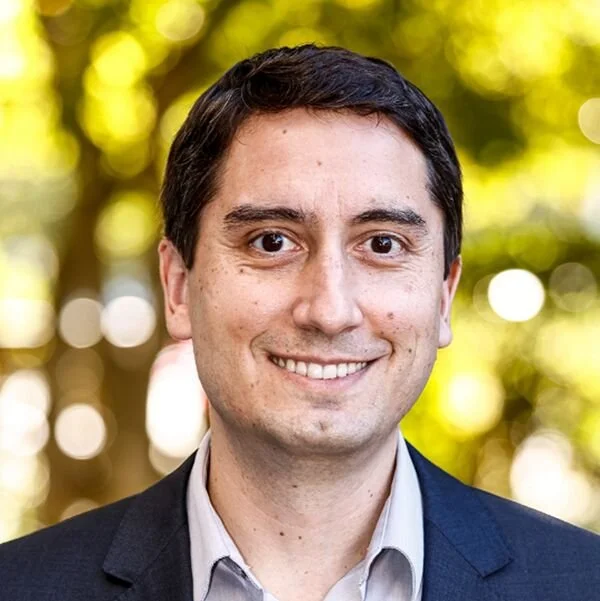
Jon Valant is the director of the Brown Center on Education Policy and a senior fellow in Governance Studies at Brookings, where he holds the Herman and George R. Brown Chair in education studies. Valant is a researcher who specializes in K-12 education policy and politics in the United States. Much of his work examines inequities in education and the policies that mitigate or exacerbate those inequities.
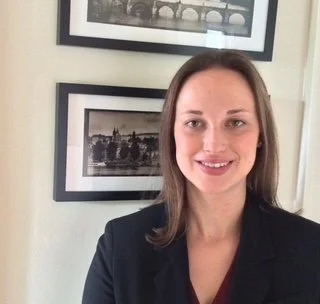
Jessica Levin directs ELC’s litigation efforts in state and federal courts. She also directs Public Funds Public Schools, a national campaign to ensure that public funds for education are used to support and strengthen public schools.
Prior to joining ELC as a Skadden Fellow in 2014, Jessica served as a law clerk to the Honorable Carlos F. Lucero of the U.S. Court of Appeals for the Tenth Circuit. She received a B.A., magna cum laude, from Cornell University, an M.Phil. in Comparative Government from the University of Oxford, and a J.D., cum laude, from Harvard Law School.
Related Episodes
If you enjoyed this episode, you might also like: